

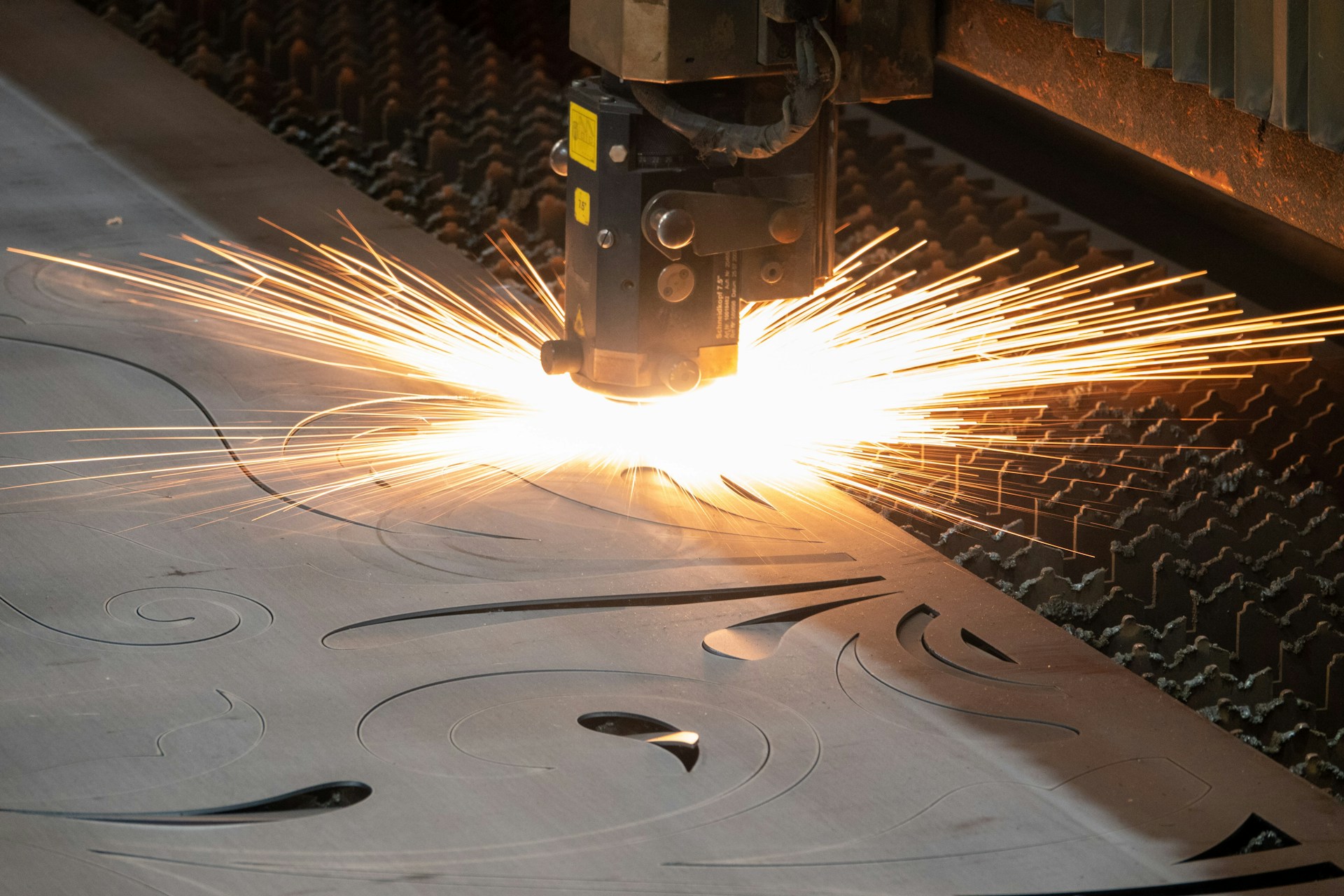
For years, subcontract laser cutting has given manufacturers a straightforward way to increase capacity without investing in additional machinery. It has allowed businesses to accept more work, avoid large capital expenditure and access specialist cutting capabilities whenever demand required it.
That model still has its place, but many engineering companies are beginning to reassess where outsourced processing fits within their production strategy.
Across the UK manufacturing sector there is growing interest in bringing key processes back under direct control. While cost remains part of the discussion, businesses are increasingly considering the broader impact subcontracting can have on lead times, production planning, and customer service.
Few manufacturers operate in isolation. Fabrication businesses often supply components that move through several stages before becoming part of a finished product. A delay during laser cutting can affect machining, welding, painting, assembly and final delivery, creating disruption throughout the production schedule.
When cutting work is carried out externally, production teams have less influence over those timescales. Even the best subcontractors have competing workloads, planned maintenance and capacity limits. An urgent customer order or late design amendment may require components to be processed immediately, but availability ultimately depends on another company’s production schedule.
As customer expectations continue to change, that lack of flexibility is becoming more noticeable.
Manufacturers supplying industries including construction, transport, agriculture and general engineering are frequently being asked to shorten lead times without compromising quality. Customers increasingly expect suppliers to react quickly to specification changes, accommodate smaller production runs and provide reliable delivery dates.
For many businesses, greater control over the manufacturing process is becoming just as valuable as reducing production costs.
Bringing metal cutting back in-house allows components to be produced when they are needed rather than when subcontract capacity becomes available. Production schedules can be adjusted more easily, priorities can change throughout the day and urgent work can often be accommodated without waiting for external processing.
Technology has also played an important part in making this approach more practical.
Modernfibre laser cutting machines are significantly faster, more energy efficient and easier to maintain than previous generations of laser equipment. Improvements in cutting performance, automation and machine reliability have widened their appeal beyond large-volume manufacturers, making them a realistic option for many small and medium-sized engineering businesses.
Material management is another consideration.
Steel prices have fluctuated considerably over recent years, increasing the importance of reducing waste wherever possible. Producing components internally gives manufacturers greater visibility over sheet usage, nesting strategies and stock control. Material can often be allocated more efficiently, helping businesses make better use of each sheet rather than simply focusing on the price of subcontract cutting.
The conversation has also shifted beyond individual jobs.
Many manufacturers now assess the overall cost of outsourcing rather than comparing quotation prices alone. Transport, administration, delivery coordination, scheduling delays and production downtime all contribute to the true cost of external processing. While these costs may not appear on a purchase order, they can have a noticeable effect on productivity over time.
This does not mean subcontract laser cutting is disappearing.
External suppliers continue to provide valuable support during periods of high demand, specialist projects and overflow production. Many businesses will always benefit from maintaining relationships with trusted subcontractors. The difference is that manufacturers are becoming more selective about which work they outsource and which operations they prefer to retain internally.
Another factor influencing investment decisions is resilience.
Supply chain disruption over recent years demonstrated how dependent production can become on external suppliers. Businesses that controlled more of their own manufacturing processes were often able to adapt more quickly when lead times changed or material availability became unpredictable.
That experience has encouraged many manufacturers to review where they have opportunities to improve operational flexibility.
Recruitment has also influenced thinking across the sector. Skilled labour remains difficult to recruit in many parts of UK manufacturing, placing greater emphasis on equipment capable of increasing output without requiring proportionally larger workforces. Improvements in machine automation, loading systems and software have helped make modern laser cutting technology more productive while reducing manual intervention between jobs.
Investment decisions are therefore becoming broader than simply replacing ageing machinery.
Manufacturers are looking at production capacity, scheduling flexibility, quality control, energy consumption, maintenance requirements and long-term operational resilience together rather than considering each factor independently. The objective is not simply to cut metal more quickly, but to build production systems that are better able to respond to changing customer requirements.
For many engineering businesses, bringing laser cutting back in-house is part of that wider strategy. Rather than relying on external processing for every order, manufacturers are looking for greater control over the stages of production that have the greatest influence on delivery performance, efficiency and customer satisfaction.
As investment across the sector continues, it is becoming increasingly clear that modern manufacturing is not defined solely by the equipment on the workshop floor. It is equally shaped by how much control businesses have over their own production, and more manufacturers are deciding that keeping metal cutting under their own roof is an investment worth making.
